


What are Dental Bridges?
A dental bridge is a fixed dental restoration used to replace one or more missing teeth. It is literally ” bridges” the gap left by missing teeth by attaching an artificial tooth( or teeth) to the natural teeth or dental implants on either side of the gap.
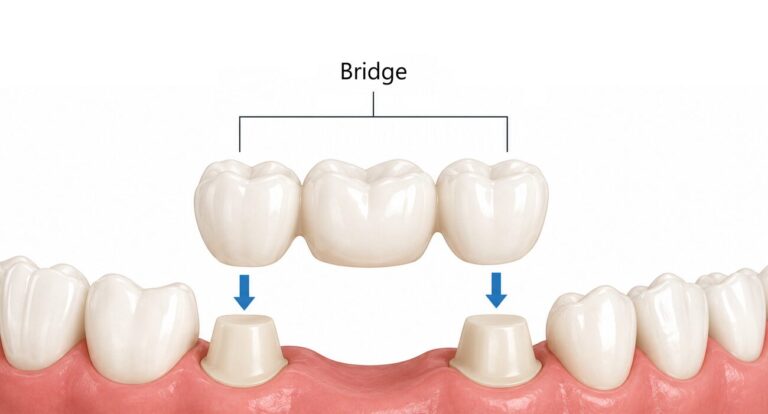
Who Needs Dental Bridges?
- You are missing between one and four consecutive teeth on the same side of your mouth or at the front of your mouth.
- Your tooth loss is the result of severe decay or trauma to the tooth.
- The function of your teeth is adversely affected— meaning that you can’t bite or chew your food as normal — or your missing teeth are affecting your speech.
- Other tooth replacement solutions aren’t suitable for you. For example, you may not be a candidate for a dental implant.
Types of Dental Bridges
While most dental bridges share similarities in their design, there are several types available. This enables you to pick the bridge that best suits your individual needs.
Traditional Bridges
Implant-Supported Bridges
This innovative type of bridge uses the dental implant technique to support it. The crowns are secured onto implant posts that have been surgically placed into the jawbone rather than onto your natural teeth. Also known as a dental implant bridge, it’s considered stronger and more secure than alternatives. However, it is only suitable for patients with enough healthy bone in their jaw to support it.
Dental Bridge Procedure
Typically, you can expect the process to take place in a number of steps:
- Teeth next to the gap area needs to be prepared. This involves the removal of some of the tooth structure so the crowns fit properly.
- Impressions will be taken of your teeth. These will be used to create your bridge which will be made in the perfect shape and size to fit into the available space.
- A temporary bridge will be placed over the abutment teeth to protect them while your permanent bridge is being created.
- Finally, you’ll return to have your temporary restoration removed, your permanent bridge checked for fit and then secured into place.
It’s important to be aware that the process of getting an implant-supported bridge is different. At the first stage, you will need to have your implants surgically placed and given time to heal.
Pre-Treatment Care
Your dentist will want to make sure that your teeth and mouth are healthy before you undergo a dental bridge procedure. A robust oral hygiene routine at home and professional dental clean with your dentist before your procedure are strongly recommended. You’ll be given a local anesthetic before each appointment which will ensure that you aren’t in pain while the work is carried out.
Post-Treatment Care
Monthly Payment Options That Work for Your Budget
We understand that not everyone has dental insurance that will cover the cost of a dental bridge, particularly if you are having an implant-supported bridge. We are delighted to offer monthly payment options that can work for your budget, helping you to get the quality of care that you deserve.
We offer a variety of payment options to make your crown affordable. We also accept most dental insurance plans and have a dental discount program for patients without insurance. Call us at our toll-free number 888-329-8111 or make an appointment online here.
Frequently asked questions (FAQs)
A traditional bridge could last between 5 and 15 years depending on your oral hygiene practices. Implant-supported bridges are the most durable of all and could last several decades or more if your mouth remains healthy.
This really depends on your individual circumstances. Dental implants require sufficient healthy bone for them to be successful which is something that not everyone who has experienced tooth loss has. Implants offer greater stability and longevity. However, they are more expensive, and the procedure is much more invasive. Speak to your dentist who will help you to decide whether a dental bridge or dental implants are right for you.
The cost of a dental bridge procedure can vary depending on the type of bridge and the type of the crown. The typical is between $900 and $1,300 for each crown. Contact us for a consultation and to determine your actual cost.
A dental bridge works by filling the gap in your smile with a prosthetic tooth that is supported on either side by crowns that hold the structure in place. This restores the function and appearance of the teeth so that you can use them normally and feel confident in your smile.
A dental bridge is designed to look as much like your natural teeth as possible with each bridge being tailored to the requirements of each patient. Impressions help ensure that your bridge is the perfect shape and size to replace your missing teeth. It can also be glazed in a shade to match your existing teeth making your restoration extremely discreet.
Cleaning a dental bridge is extremely easy as it can be brushed and flossed just like your natural teeth. It’s important to use a soft bristled brush so that you don’t damage the bridge or irritate the gums. If you brush too hard, the gums could pull away from the teeth, receding and increasing your risk of developing gum disease. Cleaning your dental bridge is essential to keep it strong and looking healthy.
Dental bridges are designed to be resilient, but there can be occasions when they come loose. Some of the symptoms of a loose dental bridge include:
- Tooth sensitivity.
- Discomfort — as though your teeth don’t quite fit together properly.
- A foul taste in your mouth.
- Bite issues such as finding it harder to eat than usual.
- Your dental bridge moves when you touch it.



